Launching Your Podcast in 2026: The Complete Guide
From choosing your concept to your very first release, here is the step-by-step method to build a podcast that lasts longer than 3 episodes.
90% of podcasts stop before their 7th episode. The reason is almost never technical: it is an issue of format, pace, and enjoyment. Creators invest in a fancy microphone, record 3 episodes in two weeks, and then quietly give up when the listening figures fail to take off. What we see at the studio is the exact opposite: the podcasts that endure are those designed as a 24-month venture, not a 3-month experiment.
Here is the framework we use with our guests. It does not guarantee instant success, but it eliminates 80% of the reasons people quit.
1. Define a concept sustainable over 50 episodes
Before touching a microphone, map out the concept on a single A4 sheet. If you cannot brainstorm 50 topics in 20 minutes, your concept is too narrow. Broaden your scope or pivot your angle. A podcast is not just a one-off episode; it is a promise delivered 100 times over.
A solid concept fits into one sentence and answers three questions: who am I talking to, what am I talking about, and what will the listener gain from every episode? If any of those three answers feels vague, you will hit a wall by episode 5.
The tagline test
Write your podcast's tagline in a single line. If you cannot articulate it clearly, potential listeners will not grasp it either. Examples that work: "Behind the scenes with French B2B entrepreneurs", "Everything about product design for solo founders", "30 minutes with an independent creator making a living from content".
2. Choose a format that suits your energy
Your format should match your natural personality, not the latest trend. A 25-minute weekly solo show when you hate writing and thrive on conversation is a recipe for disaster.
- Solo (15–25 min): ideal for sharing specific expertise, requires substantial scripting upfront
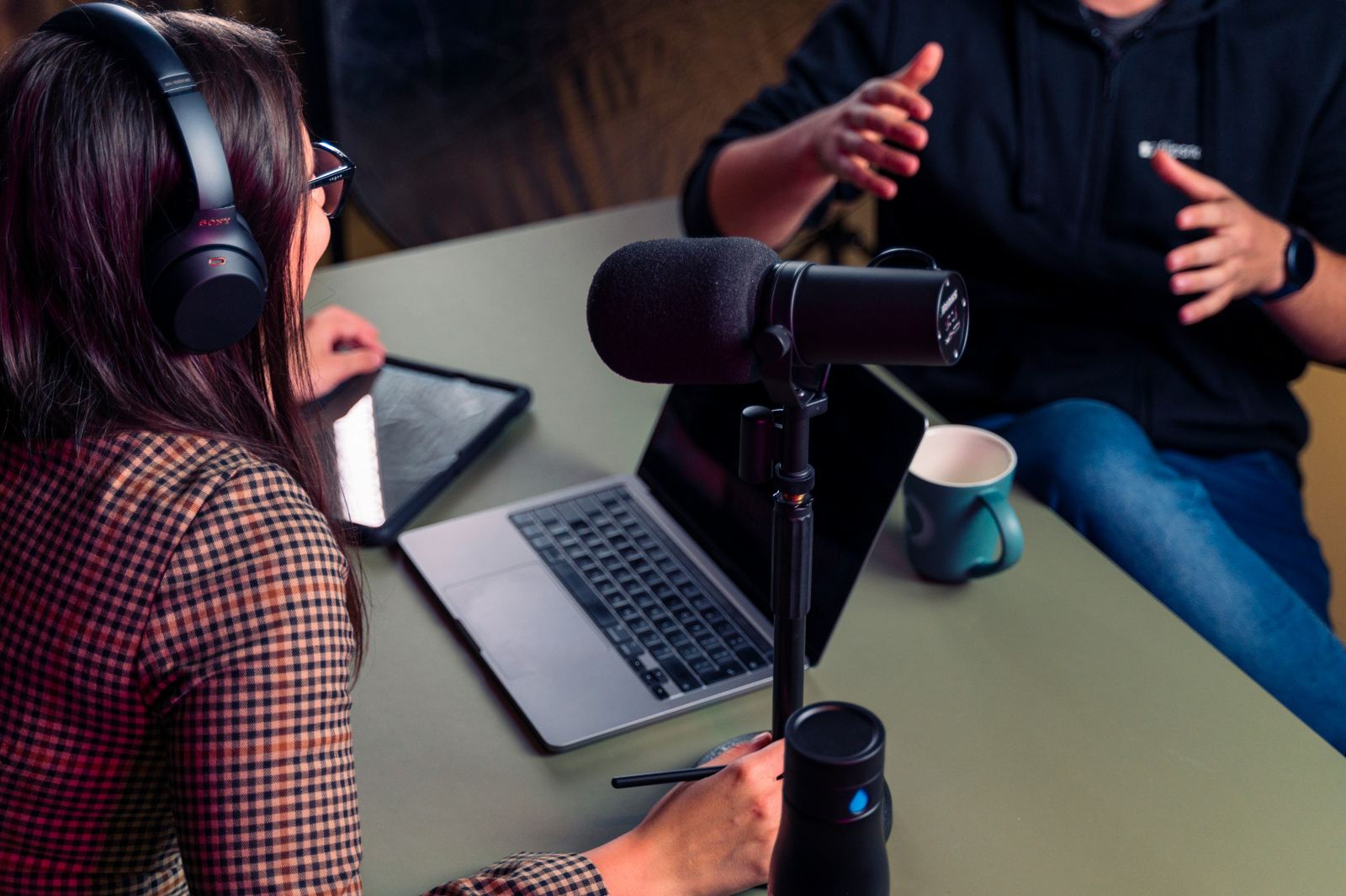
- Interview (45–60 min): perfect for building a network, requires thorough research but minimal scripting
- Co-hosted conversation (30–45 min): genuine and engaging, but requires genuine chemistry between hosts
- Narrative (20–30 min): premium quality, production-heavy (scripting, editing, sound design)
Our advice: if this is your first podcast, go for the interview format. It takes the pressure off carrying the content entirely by yourself, and asking thoughtful questions is the fastest way to improve.
3. Record 3 episodes before publishing
Publishing a single episode and waiting for feedback is the classic trap. Record 3 episodes in one go: it forces you to validate your format, creates immediate momentum for your launch, and gives you a comfortable buffer so you do not panic by week 2.
Bonus: having 3 episodes ready works in your favour with platform algorithms. Spotify and Apple Podcasts measure audience retention over the first 48 hours. Releasing 3 episodes simultaneously significantly increases your chances of featuring in "New & Noteworthy" sections.
“We have seen podcasts take off on their 12th episode. None ever took off on their 1st.”
4. Technical setup: keep it simple, do it well
A reliable microphone and an acoustically treated room are really all you need to start. Video is not mandatory on day one — though it does quadruple your reach across social media. That is why we include 3 Sony cameras and 48-hour delivery in all our studio packages.
The minimum viable gear
- A dynamic microphone such as the Shure MV7 or SM7B (between 250 € and 450 €)
- An audio interface (RodeCaster Duo, Focusrite Solo)
- Closed-back monitoring headphones
- A room with curtains, rugs, or a sofa to absorb flutter echo
Anything beyond this is a nice-to-have. Anything below this will turn listeners away within the first 30 seconds.
5. Cadence: consistency beats perfection
An episode every fortnight for a year is far better than an episode every week for two months. Block out your recording sessions in advance and treat your recording schedule with the same discipline as a client meeting.
We recommend setting aside a half-day every 4 weeks to batch-record 2 to 3 episodes back-to-back. You will stay 6 to 8 weeks ahead of your publishing schedule, which completely removes the stress from the process.
6. Distribution: do not neglect launch day
Countless brilliant episodes get buried simply because the release was rushed. Prepare everything in advance: a polished title, a keyword-rich show notes description, a clean thumbnail, short clips for LinkedIn and Instagram, and a ready-to-share media kit for your guest.
Launch day is not a mere formality; it represents 30% of your episode's overall success.
Ready to get started?
Book a studio session. Three Sony cameras, an operator, footage delivered within 48 hours. You leave with your files and nothing to worry about.